

As AI becomes increasingly popular, we are forced to adapt to its involvement in our work, school, and personal lives.
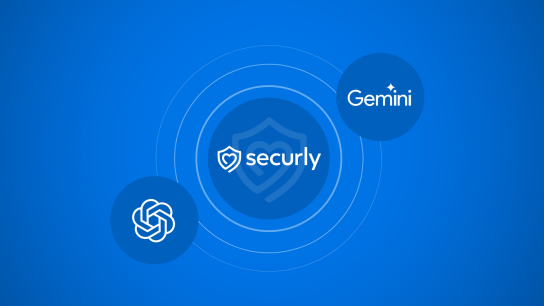
In response, Meridian administration has placed new restrictions on the role of AI in academics. The school board is also creating a new AI policy to regulate all AI usage throughout FCCPS. Meridian has blocked ChatGPT, and the website now redirects students to use SecurlyAI and Google’s AI product, Gemini.
This decision was made based upon student safety concerns. With ChatGPT, the school cannot secure any information and prevent it from being provided to OpenAI or a third-party. Using Securly and Gemini protects student and school data.
“As a faculty member, I understand it as a security thing, where ChatGPT does not actually protect your data,” chemistry teacher Ms. Isabelle Psaki commented.
In the past, Securly could not record or flag anything put into ChatGPT. However, when students are redirected to SecurlyAI and GeminiAI, all conversations can be monitored. If a student talks about harming themselves or others through their school computer on an AI platform, the school should know for safety reasons and should be informed, which they cannot do if ChatGPT is used.
In the past, if something dangerous was typed into ChatGPT, the admin would get no notice. Now, if something like that is typed into Gemini or SecurlyAI, the system will flag that response and notify admin.
However, admin and teachers cannot actually search through your AI history. Although the system can flag certain searches with key words or phrases, overall, your search history is private.
If a student is suspected to have used AI on a school assignment more than the allowed amount, teachers can ask to view your AI search history. “There’s no control room where anybody looks at everyone’s [AI search history]…That doesn’t happen,” Principal Laub explained.
Students also commented on the new AI policy.
“I think it’s a good idea because it’s important that people use their own ideas, and it’s easy to continuously rely on AI when you don’t even need to use it,” said freshman Rose Cobucci. “However, there are benefits to using AI, like for studying and deeper understanding of a subject.”
Some students have mixed opinions about AI.
Additionally, sophomore Ayako Tsuruno commented, “I think it’s kind of mixed, but I think it’s also useful…People could do the things we do now without using AI in the past before it existed.”
One student mentioned that although ChatGPT can be used for cheating, blocking it has some downfalls.
“It’s good because it stops students from cheating, but also a lot of students have found ways to help that the teachers are okay with. In my classes, some of our teachers would be like ‘Yes, you can use ChatGPT to do this.’ In AP Government, [Ms. Pam Mahony] told us that we can use it for our note cards,” sophomore Anika Tegenfeldt remarked.
A teacher also mentioned how AI can be used to cheat and that blocking it is a good idea.
“The unfortunate reality is that a lot of students use ChatGPT to cheat. It’s a convenience, it substitutes the thinking for you, which is extremely unfortunate. So I understand blocking it in terms of cracking down on cheating, for one.” Psaki noted.
“I think that generative AI tools like ChatGPT and Gemini are here to stay. They’re not going away. They’re also not perfect, and so I think that my job as principal, I think our teachers’ job as a school is to give students a safe environment where they can learn about these, and learn how to use them, and learn the appropriateness of using them,” Laub said.
The new ChatGPT policy comes with mixed reactions. People understand that there was a reason for blocking it, security concerns as well as blocking it for academic integrity. This action is one part of a bigger AI policy in the works.