

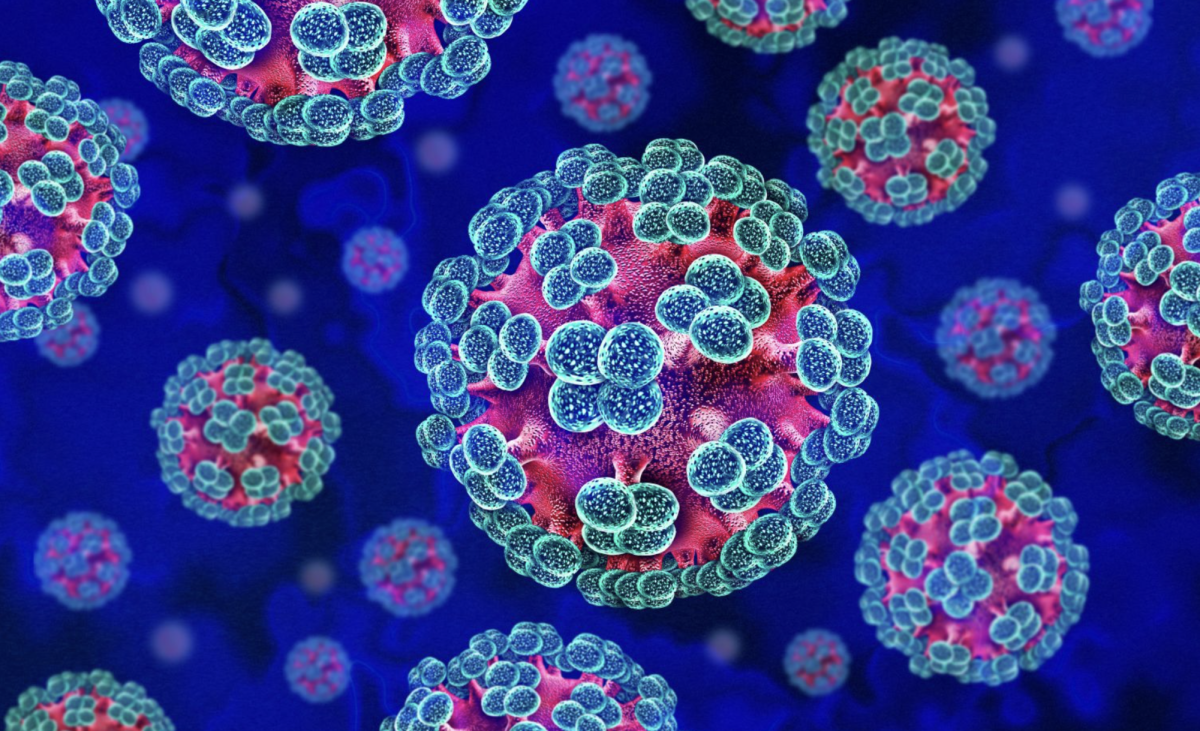
On Apr. 1, an ‘ordinary’ ship named the MV Hondius departed from Argentina with 147 passengers and crew aboard. However, it was later found that this deemed ‘normal’ cruise had a deadly virus, classified as Andes virus. A strain of Hantavirus, it has already claimed 3 victims. As of May. 4, the number of cases has grown to seven, consisting of two laboratory cases and five suspected cases.
The symptoms present as normal influenza or a common cold, and are characterized by a, “fever, gastrointestinal symptoms, rapid progression to pneumonia, acute respiratory distress syndrome and shock,” stated by the World Health Organization (WHO).
Despite the recent vast acknowledgment of this disease, it was originally discovered in the 1950s in Korea after the Korean War. It was reported by The National Library of Medicine that, “More than 3,000 cases of Korean hemorrhagic fever were reported among UN troops.”
It was not until the 1980s that the disease was truly researched. It was originally assumed that the illness was only present in the old work, but it was found later in the Southwestern region of the U.S. For varied countries, the strain is different due to the species of rat being nonidentical. The most common type of rodent for the U.S. and Canada is the deer, while in countries such as China and Russia, the striped field mouse is the most common carrier.
On the journey, the ship made numerous stops including places such as South Georgia, Saint Helena and Antarctica. The contact between animals and the passengers is still unfortunately unknown, however, it is known that it was caused by contact with rodents or mice. This is through the form of droppings, urine or saliva of infected rodents or by touching those same surfaces.
There is no true cure of this illness. If caught early enough, patients who receive medical care in an intensive care unit (ICU) will most likely improve. Occasionally, antiviral drugs such as ribavirin are used to treat strains of this disease, but no large trial has proven they work effectively.
After Covid-19, the social impacts of quarantining and having to stay six feet apart is enough to make most go into a deep frenzy of fear of repeating the same events. Nevertheless, , for some it isn’t just the social aspects driving unease, but rather the survival rates.
“I think the scary thing about Hantavirus is the survival rates. You know, 30% to 40% of people who get it die. That’s a scary number, but I also feel that it’s maybe not as municipal as other things,” English teacher Mrs. Andrea Hanna commented.
It is not the greatest concern for many due to how Covid-19 already prepared the world for another virus. There are more safety precautions available and ready to be enacted if another disease were to start.
“It doesn’t spread as much as Covid does,” sophomore Lyla Anderson said. “With Hantavirus, you need to be in constant contact with someone who has it.”
This disease may be scary, but once citizens understand that it has been around for years, it is a much less scary concept. The world is just afraid of another pandemic, and the public fear mongering is not helping anyone’s concerns.