

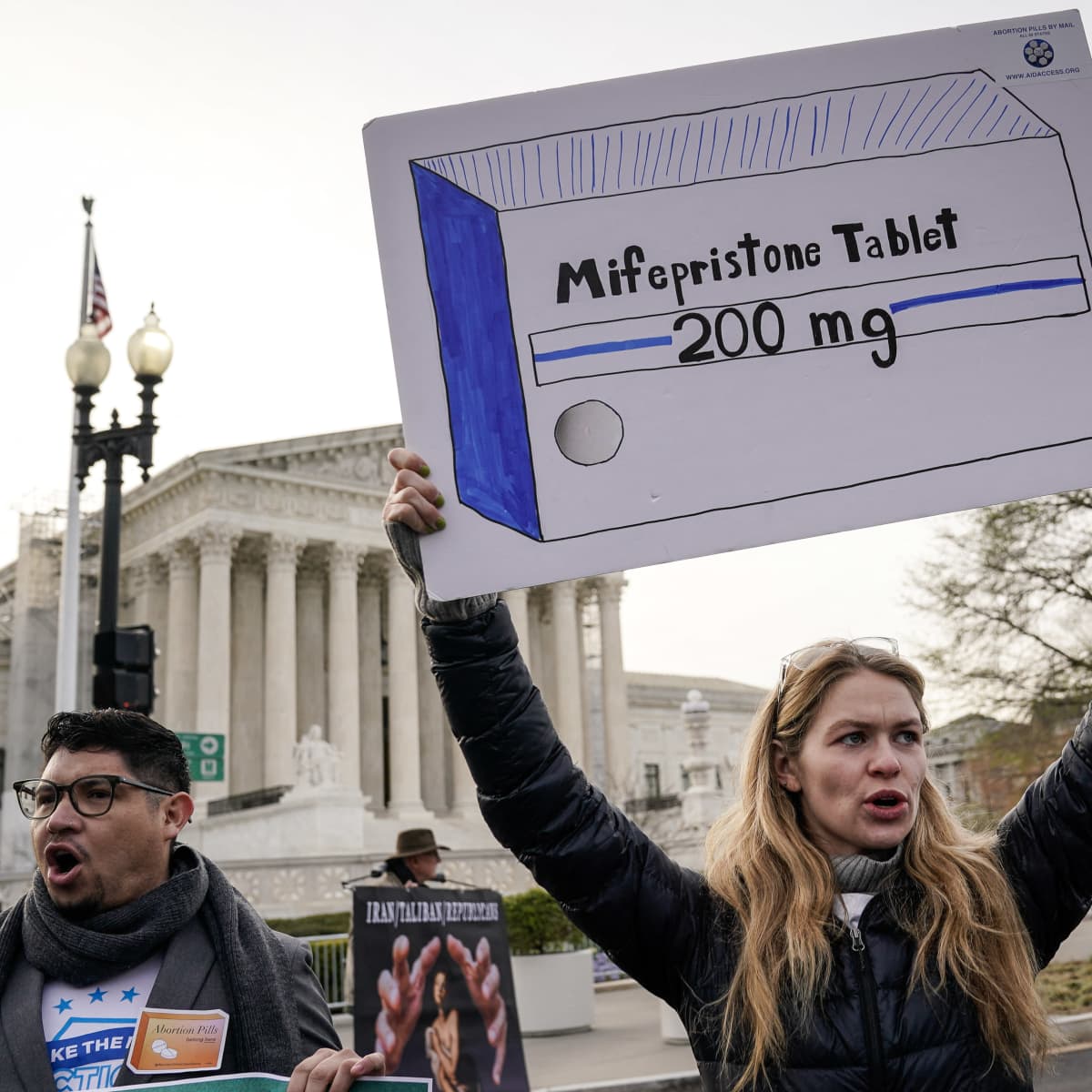
On May. 14, the Supreme Court ruled that access to mifepristone, an extensively-used abortion medication, could continue through telehealth prescriptions and delivery by mail.
The debate on access to abortion pills was reignited following Louisiana’s lawsuit against the Food and Drug Administration (FDA) in Oct. 2025. The state sought to put an end to accessing abortion pills by mail and in hopes of requiring these pills to be prescribed and acquired in-person. Louisiana argued that the FDA regulation allowing telemedicine and mail-order delivery directly interfered with Louisiana’s state-level abortion ban.
Receiving abortion medication through telehealth allows individuals in states with abortion bans to access care. This is made possible through shield laws, which protect patients and providers from out-of-state lawsuits, investigations and prosecutions regarding legal abortion care.
Abortion medication commonly comes in a two-step process. The first step is to take mifepristone, which blocks a hormone necessary for carrying out a pregnancy. After 24-48 hours, the second pill, misoprostol, is administered. This pill causes contractions similar to having a miscarriage. Misoprostol, however, is not affected by the lawsuit.
The Louisiana v. FDA case was brought before the U.S. Court of Appeals for the Fifth Circuit. On May. 1, the Fifth Circuit ruled in favor of Louisiana and ordered the FDA to halt the mailing of mifepristone nationwide, aiming to reinstate in-person dispensing requirements.
In response to the Fifth Circuit’s ruling, two mifepristone manufacturers, Danco Laboratories and GenBioPro, urged the Supreme Court to intervene. Danco claimed “Louisiana’s theory—that it can base standing on having to pay those doctors if someone who received FDA-approved mifepristone through the mail seeks follow-up care to treat a complication—is a more attenuated version”of the theories that the court specifically rejected two years ago in FDA v. Alliance for Hippocratic Medicine.
Justice Samuel Alito, who handles emergency appeals from the Fifth Circuit, initially paused the lower court’s decision to restrict access to mifepristone until May. 11 at 4 p.m. in order to give the Supreme Court time to review the emergency requests from manufacturers of the medication. Alito later extended the hold until May. 14 at 4 p.m., which was then extended once again indefinitely, allowing mifepristone to remain available by mail while legal challenges continued in lower courts.
In response, Louisiana emphasized the health risks of allowing access to mifepristone. Liz Murrill, the state’s attorney general, said the FDA regulations had resulted in about “1,000 illegal abortions in the state each month, and thousands of dollars in Medicaid costs to treat women harmed by mifepristone,” according to The New York Times.
Additionally, Louisiana stated that “over $92,000 in Medicaid dollars” had been spent “for emergency room care and hospitalization resulting from just two mifepristone-induced abortions in 2025,”.
In his dissenting opinion, Justice Clarence Thomas argued that the drug companies “cannot, in any legally relevant sense, be irreparably harmed by a court order that makes it more difficult for them to commit crimes,” according to Cornell Law School.
“I think that it is a good decision because some people don’t have access to clinics in their states,” said sophomore Anastasia Gjorgjijevski.
Sophomore Israa Elzamzami agreed.
“This decision is very important for people who live far from pharmacies and rely on access to these pills,” she shared. “However, I was surprised by the Supreme Court’s decision in this case because the Court currently has a conservative majority and only two justices dissented.”