

Beginning in the 2026- 27 school year, IB History classes are going to change dramatically, both for students and teachers. Earlier this year, IB released new instructions regarding curricula that our school will shift to follow.
The primary change in the new course is that less material is to be covered, with a commensurate change in the course IB exams. The Paper 3 exam will be reduced from three questions to two, Paper 2 will change from two questions to one essay question with more short responses, and Paper 1 question framing will be slightly altered.
The curriculum will also introduce four new specified concepts: cause and consequence, continuity and change, perspectives, and significance, which are to be woven through the course. Finally, prescribed subjects have been renamed to paired case studies, world history topics have been renamed to global themes, and depth studies have been renamed to regional in-depth topics.
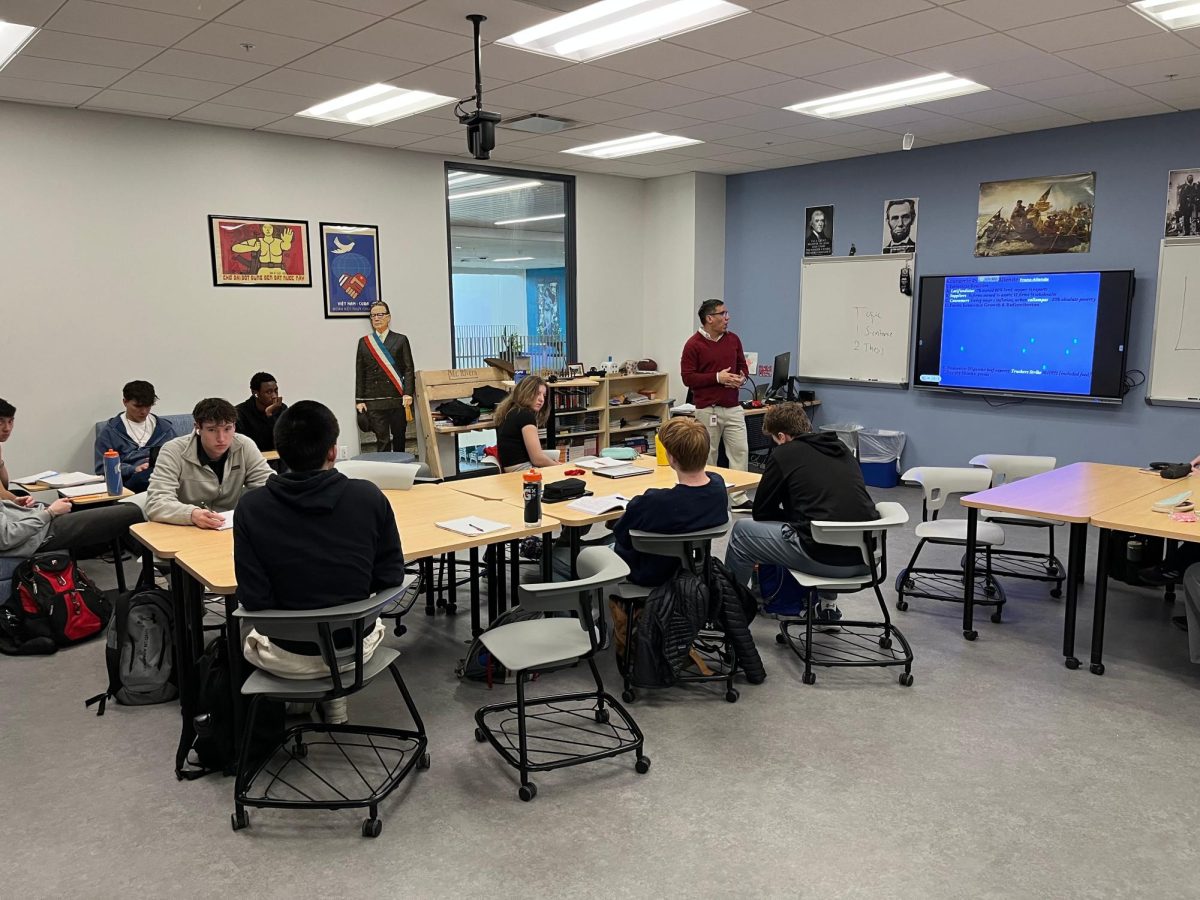
“Sometimes teachers will use the phrase ‘a mile wide and an inch deep,’” History of the Americas teacher Mr. Rivera stated. “What that means is that currently we have tons and tons to teach, but you can’t really do anything investigative about it because you’re not going to cover the other content.”
Juniors and seniors entering an SL or HL course next year will experience the new curriculum. However, students that are currently undergoing the first year of an HL History course will not see the curriculum or testing changes during their second year, as they will remain on the original curriculum.
IB plans on reducing content to provide teachers with more time to focus on developing students’ historical analysis skills and investigative ability.
“You have the content, and you have the approach,” Mr. Rivera said. “There’s this age-old discussion in history: ‘Do we cover more content, or do we focus on skills?’ Students need time to investigate and to do projects, and the more time you spend on that, the less time you have to cover new content.”
This comes as part of a broader debate over the focus of history instruction, with one faction arguing in favor of more expansive content learning and the other arguing for decreased quantities of content in favor of student discussion and investigative work.
“The fastest and quickest way to teach anything is to just lecture all of it,” Mr. Rivera noted. “And you can cover tons of material, but that isn’t responsive – that doesn’t include the students a lot. So the unspoken idea behind this is that the less material that you’re responsible for, the more inquiry-based it is, and the deeper students can get into the material.”