

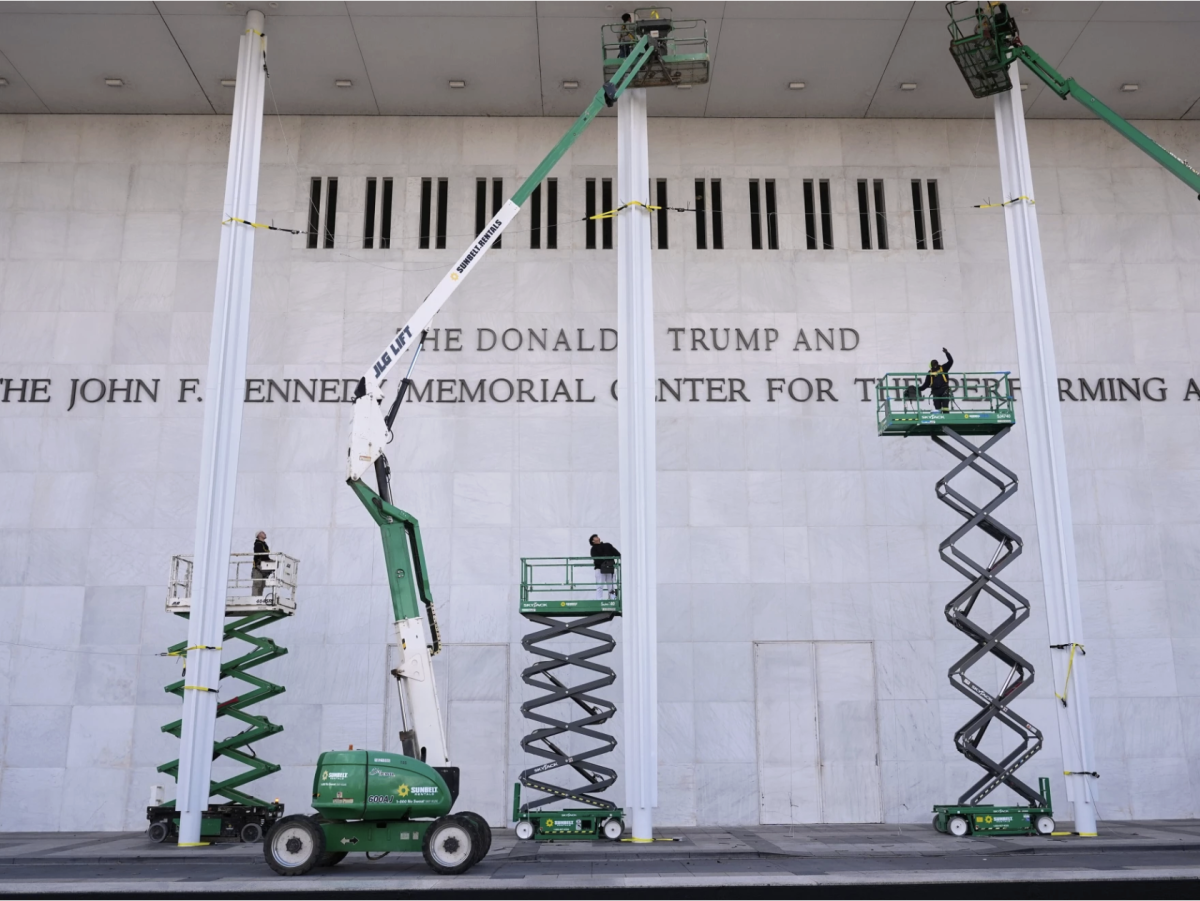
On Feb. 1, President Donald Trump announced that the John F. Kennedy Center for Performing Arts would close for approximately two years as a part of a major reconstruction effort. According to Trump, the lengthy shutdown is the fastest way to complete the work. He also added that the plan for these renovations has been approved by the Kennedy Center board.
The announcement of this plan came approximately a year after Trump ousted the Kennedy Center’s previous board and replaced them with a set of trustees aligned with his administration, having the new board elect him as its chairman. For example, Richard Grenell, a special missions envoy under the Republican party, has been appointed by Trump as interim President of the Kennedy Center.
The newly instated board later voted to add Trump’s name to the institution, which was a change that drew both public and legal criticism because federal law designates the venue a memorial to President John F. Kennedy.
Within the institution, leaders have begun warning employees of the significant staffing changes that could result from the long-term shutdown. In a memo from the Associated Press, Grenell said only “skeletal teams” would remain during the closure, and that many departments could potentially be temporarily halted until the reopening.
The exact numbers for how many jobs could be affected is currently unknown, as the announcement of the closing is relatively recent and the shutdown is not set to happen until Jul. 4. However, “The center employed nearly 2,500 people as of 2023,” Associated Press noted. In Grenell’s memo, he mentioned “permanent or temporary adjustments” for most staff.
In response to this renovation plan, many representing labor groups have been pushing for more clarity. An alliance of these unions posted a joint statement saying that “no formal notice or briefing has been provided” about how the closure will affect union members’ contracts.
Essentially, despite the plan for the two-year renovation being announced, there hasn’t been any information released on how the workers will be affected. Additionally, union members of these labor groups warned they would enforce protections if members are displaced.
In terms of performing artists, several have already withdrawn from scheduled performances in July, citing leadership changes as the reason. Composer Philip Class pulled his anticipated Symphony No. 15 “Lincoln” from its premiere in June with the National Symphony Orchestra, saying in a statement provided to the Washington Post that “the values of the Kennedy Center today are in direct conflict with the message of the Symphony.”
For some Meridian students, the closure impacts them in a personal way. Freshman Leila Carney first visited the Kennedy Center as a child to see “Hamilton” in 2016.
“Since then, I’ve been visiting the Kennedy Center maybe once or twice a year? I’m not really that into it anymore” she remarks. “But, I would really hate to see it close for so long, and I don’t really think it should have Trump’s name on it” she adds.
Ultimately, the Trump Kennedy Center is a well-known and unique place in American cultural life. Created as a memorial to late President Kennedy and administered as a part of the Smithsonian Institution, it serves as a national cultural symbol as well as a performance venue. As July approaches, details are shaky on the renovation’s cost, handling of ticket holders, and what support will be provided to staff members.