

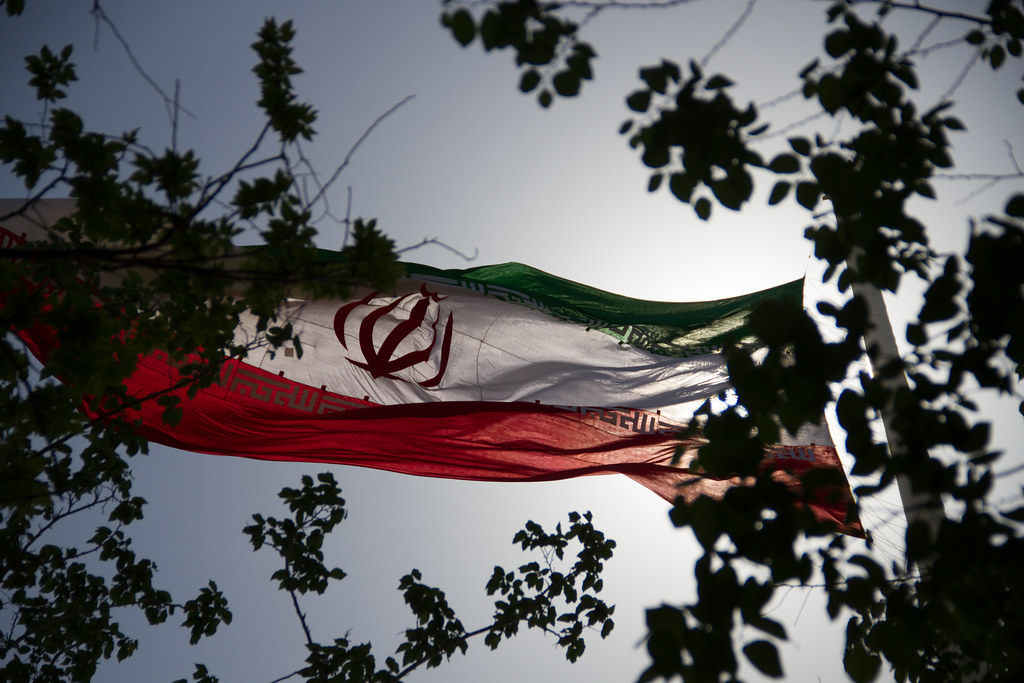
On Feb. 28, the US and Israel launched a joint campaign against Iran, killing the nation’s Supreme Leader Ayatollah Ali Khamenei along with about 40 other senior members of the Islamic Republic’s regime. The death of Khamenei sent shockwaves across the continent, sparking criticism from international leaders.
China’s Foreign Minister Wang Yi called the US-Israeli attack on Iran “unacceptable,” and condemned the “blatant killing of a sovereign leader and the incitement of regime change” (CNN). Meanwhile, Putin claimed Khamenei’s killing was a “cynical murder” that violates international law.
However, Khamenei’s death has also filled the streets of Iran with joyous anti-regime citizens who have been reported to be launching fireworks, blaring car horns and cheering as the news of their Supreme Leader’s death spreads throughout the country.
Many Iranians viewed Khamenei’s as a dictator responsible for decades of tyranny, brutal crackdowns on dissent, and the killing of protesters. For some, his death symbolizes a “new page” in Iran, sparking hope in those who have been oppressed by his leadership.
For others, Khamenei’s death has left them feeling uncertain and anxious for what is to come. While Trump urges Iranians to stand up and take over their government, “The Iranian people don’t have the means to displace the Islamic Republic on their own,” stated Esfandyar Batmanghelidj, a professor at Johns Hopkins University’s School of Advanced International Studies-Europe (PBS).
The military strikes have caused the deaths of six US Armed Forces soldiers, while the death toll in Iran continues to rise. As of March 15, the death toll had risen to 1,444 dead in Iran, at least 15 in Israel, 13 US soldiers and 19 killed in Gulf states (Aljazera).
The majority of the 181 children were killed in a blast that hit a girls’ school in the southern Iranian city of Minab. The death toll for that strike has risen to 148, with 95 wounded, according to the local prosecutor (CNN).
While some might celebrate Khamenei’s death at night, many Iranians suffer the consequences of the US-Israeli military strikes during the day. More than 5,400 civilians, including 100 children, have been injured, HRANA reported (CNN).
The attack on Iran was coordinated by President Trump, without congressional approval. However, Trump justified the military strikes by arguing that his role as commander-in-chief allows him to take action without congressional approval as the US was under the threat of Iran’s nuclear programs.
Additionally, the administration also cited the War Powers Act of 1973, which requires notification within 48 hours of military action but allows for initial deployment without a formal declaration.
“Under the War Powers Act, the president can launch defense attacks in defense of the United States, as long as he informs Congress and the conflict lasts less than 60 days. The question is whether or not this was a defensive action by the United States. The White House maintains that it is, however critics say that it is questionable.” said AP Government teacher Ms. Mahony.
While Iran does not currently seem to possess functioning nuclear weapons, its nuclear program is at an advanced stage, with enough highly enriched uranium to create multiple bombs in a very short time. According to FactCheck.org, in late March 2025, the U.S. Intelligence Community assessed that “Iran is not building a nuclear weapon and that [Supreme Leader Ayatollah Ali] Khamenei has not reauthorized the nuclear weapons program he suspended in 2003.”
However, according to Director of National Intelligence Tulsi Gabbard, “Iran’s enriched uranium stockpile is at its highest levels and is unprecedented for a state without nuclear weapons.”
Gabbard has supported Trump’s decision to launch military strikes against Iran despite having built an anti-war campaign during her democratic campaign for president in 2020. As part of her campaign, Gabbard sold “No War With Iran” shirts during her short 2020 Presidential bid.
A week before the military strikes, Trump’s special envoy to the Middle East said that while Iran claims their nuclear capability is about their civil energy program, the amount of uranium they have been enriching is “far beyond” the amount one would need for civil nuclear energy (Fox News).
The strike on Iran has also led to global economic disruptions. For global oil the war with Iran has triggered immediate spikes in global oil prices and American gas costs as Iran has restricted traffic through the Strait of Hormuz, a vital waterway that carries approximately 20% of global oil flows. Meanwhile global travel has also been restricted as the Dubai International Airport and other major airlines have ceased flight operations (USA Today).
On March 5, Republicans rejected a resolution that was intended to require Trump to seek congressional approval for future US military action against Tehran. The chairman of the Joint Chiefs of Staff said the US would start “striking progressively deeper” into Iran.
According to a new Quinnipiac Poll conducted over the weekend, 53% of registered voters oppose U.S. military action against Iran. Only 4 in 10 support it, and about 1 in 10 are uncertain. The majority of votes said they did not believe Iran posed an “imminent military threat” to the U.S. and expressed worries about rising gas prices.
Some critics claim that the US has been dragged into this conflict by Israel, whereas Trump claims that it was him who had pressured Netanyahu into first striking: “I might have forced their hand,” Trump said. “We were having negotiations with these lunatics, and it was my opinion that they were going to attack first.”When Marco Rubio, the Secretary of State, was asked if the US was forced to strike because of an impending Israeli action, Rubio replied, “No … No matter what, ultimately, this operation needed to happen … This had to happen no matter what” (X).