

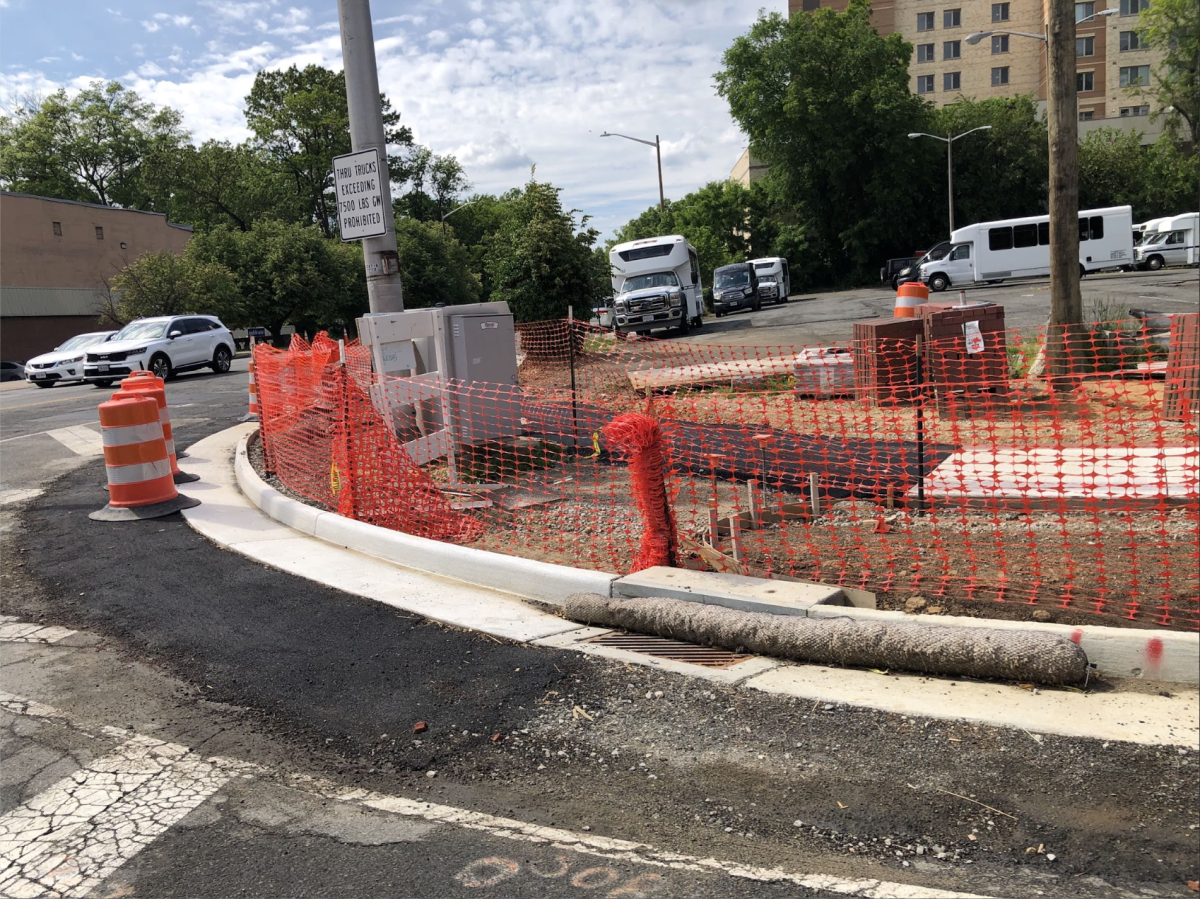
On Jul. 28, construction began on Falls Church’s new (and first) single-lane roundabout, located at the intersection of South Maple Avenue and Annandale Road. Replacing the currently existing traffic lights, the project will also install ADA-accessible ramps, pedestrian islands midway through the crosswalks and renovated sidewalks.
The intersection will remain open during much of the construction period, however the city government warns drivers to expect delays and road and sidewalk closures at various intervals.
Estimated to be completed at some point this summer, plans to redesign the intersection have been in the works since 2005. The area was first suggested for conversion in the City of Falls Church’s 2005 Comprehensive Plan, where a roundabout was proposed to calm traffic, improve pedestrian safety and require less maintenance.
To secure a portion of the land needed for construction, city council authorized the seizure of 1% of the nearby Bowl America lot through eminent domain with a 5-0 vote after 18 months of communication failed to produce an agreement.
The construction contract was awarded to Ardent Company, a McLean-based civil engineering firm. The total price of construction will be three million, 90% of which is funded by state grant money.
Student drivers at Meridian recognize the roundabout, sometimes referred to as a traffic circle, from their Driver Education classes, where they are taught how to safely navigate them.
Despite it being taught as part of Virginia-mandated Driver Ed. class, the plan has faced criticism from citizens who argue that roundabouts are nevertheless extremely uncommon in the U.S. and drivers will not know how to behave in one, increasing the risk of car crashes.
When speaking to the city council, Capital Improvements Program Project Manager Scott Freda stated that “a standard signalized intersection has 32 points of conflict whereas a roundabout has eight points of conflict, which is a huge reduction in possible collisions between pedestrians and vehicles.”
Regardless of the outcome, it is indisputable that the rest of Northern Virginia will be watching the South Maple-Annandale roundabout closely. As cities across the country look for methods of alleviating traffic fatalities and promoting walkability, the success or failure of the upcoming roundabout in Falls Church will serve as a testbed for the impacts of roundabouts on a suburban area, and will no doubt influence the decision-making process of municipalities throughout the region.